

By: Kendall Upton
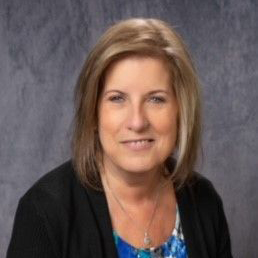
Professional insights: Lisa Laudeman
The popularity of remote and hybrid work environments these days may have current and prospective healthcare managers wondering whether they have a shot at finding a work-from-home job. With about 27.5% of workers in the U.S. working remotely as of August and September of 2022—a figure that has remained steady into 2024—it’s certainly a possibility for some.
Healthcare management is a broad field with many different types of professionals, so remote work is never a guarantee. Still, you can prepare yourself for a remote healthcare management job by understanding what kinds of roles are more conducive to remote work and how to succeed in those roles.
Working remotely as a healthcare manager
Whether a healthcare administration and/or management role can be done from home depends both on the scope of the individual job and the policies of each organization. Some roles are certainly easier to do from home than others.
“In patient financial services we have registration, billing, follow up, customer service, everything. I think billing is probably where you can have the most success at home,” said Lisa Laudeman, a patient accounts manager and the current National President of the American Association of Healthcare Administrative Management (AAHAM). “You can call a payer and get an authorization, or you can fax them, or go online and complete their form for authorization. That can all be done at home because you have the clinical data at your fingertips based on your system.”

Whether a healthcare administration and/or management role can be done from home depends both on the scope of the individual job and the policies of each organization.
“Authorization, billing, and coding—those three areas are definitely more successful at home than other areas in patient financial services can be,” Laudeman said. “Customer service side is a little bit more difficult. Patients want immediate answers. They want somebody picking up the phone.”
When it comes to roles that deal with registering new patients, Laudeman said that’s an area that you generally must be on site.
“Utilization management is another area that’s challenging. They’re the folks who do inpatient daily medical necessity reviews with the payers. It’s very difficult for them to actually work from home, because they need that, they need that clinical contact. And those clinical folks aren’t at home.”
Consider some of these job roles within the field of healthcare management and whether they can be done remotely:
- Financial services:
- Authorization, billing and coding may be performed from home, but other areas like registration or utilization management usually must be on site.
- Information technology/information security:
- Some IT/IS jobs may be able to be performed from home, but when it comes to installing new equipment and updating computer systems, IT professionals typically need to be on site.
- Emergency management:
- Emergency management professionals need to be intimately familiar with the physical layout of their facilities and available to direct operations in case an emergency occurs. You can expect most of these jobs to be fully in-person.
- Human resources:
- It may be possible to perform some job duties from home, but as an employee-centric role, human resource professionals likely have to spend some or all of their time on site.
- Patient advocacy:
- As positions that require interacting with patients and providing them assistance, you can expect these jobs to be in person.
- Marketing and communications:
- Marketing jobs may be more conducive to remote work since they require a lot of writing and minimal interaction with on-site clinical employees.
Laudeman said it really just depends on the philosophy and policies of the individual organization. Where she works at Penn State Health, she said their philosophy has been for many of their healthcare administrators to decide on a case-by-case basis with their managers whether or not they want to work from home, hybrid or fully in-person. Of course, this means managers must make sure their employees are still fully engaged with their work if they’re working from home, and she’s had to let people go because of it.
Preparing for a remote healthcare management job
Students and early career professionals should consider joining relevant professional associations like AAHAM to gain access to their career resources and learn more about the kinds of remote jobs in healthcare management that are available.
“We have a student membership program and one of the things that our education committee does is they do a lot of webinars. We try to have at least two webinars a month. They can get educated a little bit more and that would be an enhancement to their current education,” Laudeman said. “Some of the webinars that we are doing are exactly about that professional development side including remote work, and not just remote but hybrid work as well. It’s an opportunity to network, to talk with those of us who do work at home or those of us who don’t work at home. There’s opportunity there for them to look at AAHAM as a resource for that.”
Some other professional organizations that may be worthwhile to join depending on your particular niche include:
- American Health Information Management Association (AHIMA)
- Healthcare Financial Management Association (HFMA)
- National Association of Healthcare Access Management (NAHAM)
- Association for Healthcare Administrative Professionals (AHCAP)
“I think the biggest thing is just talk to people,” Laudeman said. “Walk in your local hospital and say, ‘I’m thinking of going into healthcare administrative management. I’m curious how this works. Are you working from home? Do you have a hybrid or work-from-home option?’ The more you prepare yourself individually, the better off you’re going to be.”
Even though remote work has burgeoned in the last few years, it’s still important to temper your expectations and be prepared to work in-person at some point in your career. For instance, Laudeman said that it’s very common for remote jobs to have employees start working in-person or in a hybrid format for a period of time, typically several months, before graduating to a 100% remote work environment. The purpose of this probationary period is both to train the employee and develop trust in their ability to successfully do their job from home.
The limitations of remote work
Though remote work has made it possible for employees to cultivate a healthier work-life balance without sacrificing quality or quantity of work, it doesn’t always work out that way. The fact remains that remote work still presents new challenges in healthcare and other industries.
The fact remains that remote work still presents new challenges in healthcare and other industries.
“On my side, my biggest challenge is keeping the staff who are 100% remote engaged. There are some staff that have just said, ‘Hey, I want to be in the office five days a week. I’m coming back in. Are you okay with that?’ And then you have some that want to do a hybrid [work schedule]. But all of those three options—remote, hybrid and in-person—also challenge you, because keeping [your staff] engaged is different at each level,” Laudeman said.
Laudeman said that as a revenue cycle professional, you also have to deal with payers who may also be working remotely. This can sometimes make it difficult to call up someone, follow up on a claim and make sure that the claims for services that you’re rendering to your community are actually being paid.
“I would say that the shortage of employees has really hurt healthcare overall, so you have to come up with unique [solutions]. We have some payers that say don’t call us, you have to use our website or you have to fax in an inquiry, because they too don’t have the staff to be able to handle all of those phone calls that come in on a day-to-day basis,” Laudeman said. “You also have to make sure that your workflow processes are accurate and that they work for those folks who are at home.”
Telemedicine’s impact on healthcare administration
Telemedicine—delivering clinical healthcare services remotely via digital communication—also affects how healthcare administrators and managers do their job. Telemedicine existed long before the COVID-19 pandemic, but it exploded in 2020 when healthcare providers were forced to find a contactless way to provide healthcare to an influx of sick patients. Just as clinicians and nurses had to quickly familiarize themselves with this technology, administrators and managers had new things to worry about, too.
“They had to potentially buy software which was HIPAA compliant, Medicare compliant, CMS compliant. They had to train staff. They had to come up with a package of how to register people,” Laudeman said. “A lot of hospitals were kind of already doing a little bit of that AI component where you can go on to your portal at home and register, but a lot of doctors’ offices kind of didn’t engage that early on. So there was a cost, not just from an equipment perspective but from a training side. You’re pulling people out of their normal day to train them on how to do this right. And then there were those penalties if you weren’t getting the proper documentation signed.”
Telemedicine certainly presented new challenges to healthcare managers, but it has also changed healthcare administration for the better.
For instance, telemedicine broadens access to healthcare so that more patients can be served, expanding a healthcare system’s reach. Online healthcare portals where patients can schedule their own appointments, make appointment changes, access their medical records and send messages to their provider also reduce administrative burdens since these tasks once required getting on the phone with an administrator. Virtual healthcare appointments can also reduce cancellations and no-shows since people are less likely to cancel when they have the flexibility to attend their appointment virtually.
Parting words
Some healthcare management jobs today can be done remotely, but for the most part it depends on the policies of each individual organization. If you really want to work from home, areas such as medical billing, coding, authorization, marketing and others may be more likely to offer remote jobs compared to areas like patient registration, utilization management, patient advocacy and more. By tapping into the career resources from professional associations within the industry, you can learn more about the possibility of remote work and how to succeed in your specific role.