

By: Anna Giorgi
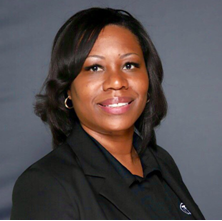
Professional insights: Leonta (Lee) Williams
Whether you’re just entering the workforce, returning after a break or transitioning careers, pursuing a career in medical billing and coding may be right for you. Jobs in medical billing and coding allow you to work in the dynamic and growing field of healthcare without being involved in direct patient care. Instead, you can make a meaningful contribution to the well-being of others by ensuring that healthcare providers are properly reimbursed for services and that patients receive the insurance benefits they need.
To become a medical biller or coder, you can choose from several educational pathways that prepare you to enter this high-demand field. From medical coding bootcamps to traditional degree programs, educational options exist to support a range of personal needs and professional goals.
What is a medical coding bootcamp?
A medical coding bootcamp is a short-term intensive program that focuses on the skills you need to work in the healthcare industry. Like other bootcamps in the computer and information technology fields, medical coding bootcamps are concentrated programs that teach essential skills and provide hands-on training in the field.
The purpose of a medical coding bootcamp is to help you earn the skills that employers desire without spending the additional time and money needed to earn a college degree. The condensed and fast-paced format of a coding bootcamp means that you may be able to complete your education in six to 12 weeks, depending on the bootcamp format and timing.

The purpose of a medical coding bootcamp is to help you earn the skills that employers desire without spending the additional time and money needed to earn a college degree.
“[In a medical coding bootcamp], students are instructed on the fundamentals of medical billing and coding, along with more of a deep dive with billing and coding concepts, coding guidelines and exercises, data analytics, health insurance and payer guidelines, etc. Students get real-world knowledge through lectures, assignments and hands-on training exercises all in an effort to prepare and fast-track employment opportunity,” says Lee Williams, MBA, MHA, RHIA, CPC, CPCO, CEMC, CHONC, CRC, CCS, CDIP, Senior Director of Education at AAPC (American Academy of Professional Coders).
What are traditional medical coding programs?
Traditional medical coding programs can include an associate or bachelor’s degree in related areas such as computer science, forensics, health information management, or healthcare administration. A degree program offers a broader educational experience that includes coursework in areas such as liberal arts and the general sciences in addition to studies related to medical billing and coding and the overall healthcare system.
A degree program offers a broader educational experience that includes coursework in areas such as liberal arts and the general sciences in addition to studies related to medical billing and coding and the overall healthcare system.
While this multi-disciplinary approach gives you the skills you need to succeed in a broader variety of career options within the healthcare field, completing these programs requires more time and money than bootcamps. A full-time student typically requires two years to complete an associate degree and four years to complete an undergraduate degree, with costs reflecting the additional educational time. However, for many people, the investment in an associate or undergraduate degree from an accredited institution is worthwhile since it provides an educational foundation for advanced degrees in the future.
Other traditional options include college-level certificates and diploma programs. These programs are offered by community colleges, career colleges and traditional colleges and universities. With an average duration of nine to 12 months, certificate and diploma programs typically have a faster time to completion than a degree. Unlike bootcamps, the curriculum of a certificate or diploma program typically involves more than one course for completion.
Which educational pathway is right for me?
The decision to pursue a medical coding bootcamp over a traditional education is a personal decision based on your needs and professional goals. As a result, a bootcamp appeals to different students for different reasons.
“[In a bootcamp], we have a very diverse student population, from nurses and other clinicians, to those already working in a business or administrative healthcare role, to those with no healthcare experience We get individuals who are transitioning from one career looking for a new opportunity, as well as those who have been stay-at-home parents or have been unemployed for quite some time looking to get back into the employment market,” says Williams.
If you’re sure that medical billing and coding is right for you, there’s no doubt that medical coding bootcamps help you begin your career much faster than pursuing a college degree. “Since bootcamps are typically shorter in duration, students may be able to enter the workforce a bit earlier compared to traditional programs that typically take two to four years. Because bootcamps focus on building the skills needed for career readiness, students are able to benefit from course activity that will directly impact and prepare them for the job force. Most students entering a bootcamp, like our coding bootcamp, have already decided a role as a medical coder or a role in revenue cycle is what they aspire to be,” explains Williams.
A traditional program may be right for you if your long-term goals involve pursuing more advanced roles in the healthcare revenue cycle with responsibilities beyond medical billing and coding. The broad education you earn with a college degree can position you for higher-level roles and more diverse responsibilities in some industries. A college degree from an accredited institution can also be used as a foundation for an advanced degree or a second degree in another field of study. “A traditional degree may be most appropriate for those who are seeking a role where the employment criteria require an undergrad or graduate degree,” says Williams.
Factors to consider when choosing between a medical coding bootcamp or a traditional program
While there are pros and cons to both types of medical coding education, here are some aspects to consider when deciding which educational pathway is right for you:
Accreditation
The accreditation earned by a college or university is proof that you are receiving a quality education. The credits earned at an accredited institution are transferable to other accredited institutions if you choose to change schools or pursue an advanced degree. Certificates and diploma programs offered by a college or university are typically covered by institutional accreditation.
Most bootcamps are not affiliated with a college or university. As such, they are not accredited since accreditation is typically reserved for higher education institutions. However, that does not mean that bootcamps can’t provide a worthwhile education. To evaluate a bootcamp, Williams advises that students consider factors such as completion rate, certification exam pass rate, career readiness support available to students, faculty expertise and the bootcamp’s partnership with employers.
Financial aid
If you require financial aid to complete your medical coding education, it’s important to understand how some medical coding bootcamps differ from a traditional school or university. Medical coding bootcamps that are not sponsored by a college or university do not qualify for accreditation by the Department of Education. Therefore, they are not eligible to participate in federally funded student aid or grant programs. However, you may be able to pursue other forms of financial aid, such as personal loans, payment plans or scholarships, depending on the bootcamp.
It’s also key to understand who is sponsoring the bootcamp you attend. Bootcamps are often held in classrooms of community colleges or other institutions. However, that does not mean that the institution is sponsoring the program. Understand who runs the bootcamp and how that impacts the education you receive.
Professional goals and personal needs
When deciding between a medical coding bootcamp and a traditional program, ensure that your choice can help you meet your professional goals while meeting your personal needs. While many people succeed in tech without a college degree, determine whether you can achieve your goals with the skills you acquire in a medical coding bootcamp. Find out what type of education your dream job requires. Investigate where recent bootcamp graduates work versus college graduates with related degrees.
Consider your learning style and what you need to succeed. Evaluate how much time and money you have to spend on your education. Think about your ability to succeed in a fast-paced learning environment versus a traditional curriculum. Decide whether you require an educational program that offers flexible part-time or online learning instruction.
Weighing your options against your professional goals and personal needs can help you make the right decision for your medical coding education. “A bootcamp may be more advantageous if you are looking to enter an industry that does not require a degree. If you are someone who would like to fast-track your education, while receiving instruction from experienced, subject-matter faculty (many who currently work in the field while instructing), a bootcamp may be for you. There is still a role for traditional programs; however, skill-based learning is being highly emphasized to deal with labor shortages many industries are experiencing,” says Williams.