

Home » Specialties » Audiologist

Learn How to Become an Audiologist: Education, Licensing & Certification

Read about audiology schools and careers, including job description and salary information.

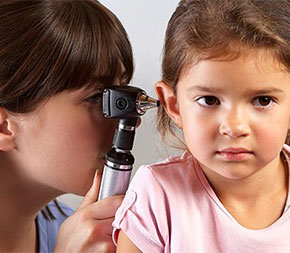
woman looking in child patient ear
author-default

By: All Allied Health Staff

Updated: December 4, 2025

Home » Specialties » Audiologist

Audiologist At a Glance

  • What you’ll do: Once you’ve decided to become an audiologist, you’ll diagnose and treat patients suffering from hearing, central auditory processing, and balance disorders. Working with patients of all ages, you’ll measure hearing ability and function; provide aural rehabilitation to reduce the effects of hearing loss on communication, learning and job performance; fit for hearing aids; and conduct research.
  • Degree you’ll need: Doctoral degree and state licensing
  • Median annual salary: $92,120

Education to Become an Audiologist

New audiologists must earn a doctorate in order to begin practicing. The doctoral degree in audiology (AudD) is a four-year graduate program that you can enter while having a bachelor’s degree in any field.

Some audiology programs, like the one at the University of Washington, allow you to specialize in an area of interest, such as pediatric, geriatric, or educational audiology. Your coursework will be more specialized accordingly.

Audiologist Coursework


  • Anatomy and Physiology: Peripheral Hearing
  • Psycho-acoustics
  • Signals, Systems & Acoustics for the Communication Sciences
  • Biological Foundations of Speech & Music
  • Amplification
  • Clinical Practice and Practicum

Typically, your first year or two will include observations, clinical orientation, a written qualifying exam, and a practical assessment. Your third and/or fourth year will offer more hands-on experience through your externship, internship or other Capstone style intensive project.

Median Annual Salary

Take a look at median annual wages for audiologists by state, as reported by the U.S. Bureau of Labor Statistics.

Audiologists

National data

Median Salary: $92,120

Projected job growth: 9.5%

10th Percentile: $61,930

25th Percentile: $76,440

75th Percentile: $109,330

90th Percentile: $129,830

Projected job growth: 9.5%

State data

State Median Salary Bottom 10% Top 10%
Alabama $76,900 $50,140 $95,790
Alaska $109,700 $78,360 $148,800
Arizona $102,130 $77,420 $116,100
Arkansas $99,330 $82,600 $132,370
California $123,600 $60,000 $169,530
Colorado $94,670 $52,000 $134,230
Connecticut $96,610 $59,780 $118,490
Delaware $78,770 $71,710 $101,920
District of Columbia $118,250 $88,460 $131,980
Florida $83,290 $52,890 $118,310
Georgia $101,920 $76,570 $128,950
Hawaii N/A N/A N/A
Illinois $84,520 $69,290 $126,560
Indiana $75,080 $61,670 $100,570
Iowa $93,790 $62,770 $119,070
Kansas $83,120 $60,830 $121,540
Kentucky $90,950 $60,870 $136,500
Louisiana $75,740 $53,600 $99,630
Maine $84,400 $71,820 $103,560
Maryland $101,700 $77,770 $127,840
Massachusetts $98,620 $47,050 $122,590
Michigan $87,530 $67,450 $103,880
Minnesota $98,410 $79,800 $115,790
Mississippi $61,150 $45,470 $95,230
Missouri $87,840 $59,990 $138,620
Montana $82,350 $45,110 $125,150
Nebraska $85,820 $77,510 $109,600
Nevada $86,290 $50,150 N/A
New Hampshire $88,410 $87,250 $111,160
New Jersey $103,510 $81,580 $129,830
New Mexico $77,440 $67,550 $110,120
New York $98,750 $74,670 $123,170
North Carolina $79,460 $44,400 $103,860
North Dakota $91,440 $80,850 $153,110
Ohio $76,720 $43,680 $103,500
Oklahoma $77,770 $58,640 $98,350
Oregon $95,000 $69,770 $128,100
Pennsylvania $87,210 $65,190 $119,540
Rhode Island $80,530 $77,400 $93,610
South Carolina $75,980 $32,200 $108,300
South Dakota $102,310 $80,140 $122,240
Tennessee $89,670 $62,670 $216,580
Texas $103,460 $74,940 $133,480
Utah $96,520 $75,070 $128,110
Virginia $85,590 $59,830 $124,610
Washington $105,120 $64,650 $138,030
West Virginia $87,980 $46,000 $119,050
Wisconsin $90,380 $69,000 $118,870

Source: U.S. Bureau of Labor Statistics (BLS) 2024 median salary; projected job growth through 2034. Actual salaries may vary depending on location, level of education, years of experience, work environment, and other factors. Salaries may differ even more for those who are self-employed or work part time.

Licensing and Certification

All states now require licensing for audiologists in addition to a doctorate. Most also require continuing education units to renew your license. You’ll also need to meet the following criteria:

  • Complete 300 to 375 hours of supervised clinical experience
  • Earn a passing score on a national exam
  • Complete nine months of post-graduate professional clinical experience

For specific requirements, check with the state’s licensing board for audiologists, in the state you choose to work in.

Audiologists can earn the Certificate of Clinical Competence in Audiology (CCC-A), offered by the American Speech-Language-Hearing Association.They also may be credentialed through the American Board of Audiology. Although it is not required, certification may satisfy some or all of the requirements for licensure and may be required by some employers.